Meta Ads Creative System — Miklos Roth


Meta Ads Creative System — Miklos Roth
In the current digital ecosystem, the algorithm is no longer the variable; it is the constant. For years, media buyers prided themselves on "hacking" the Facebook (now Meta) algorithm. They would spend hours tweaking interest groups, lookalike percentages, and manual bid caps. Today, Meta’s Advantage+ and AI-driven targeting have rendered manual audience selection largely obsolete.
The algorithm has become smarter than us. It knows who wants to buy. The bottleneck is no longer finding the customer; the bottleneck is convincing them.
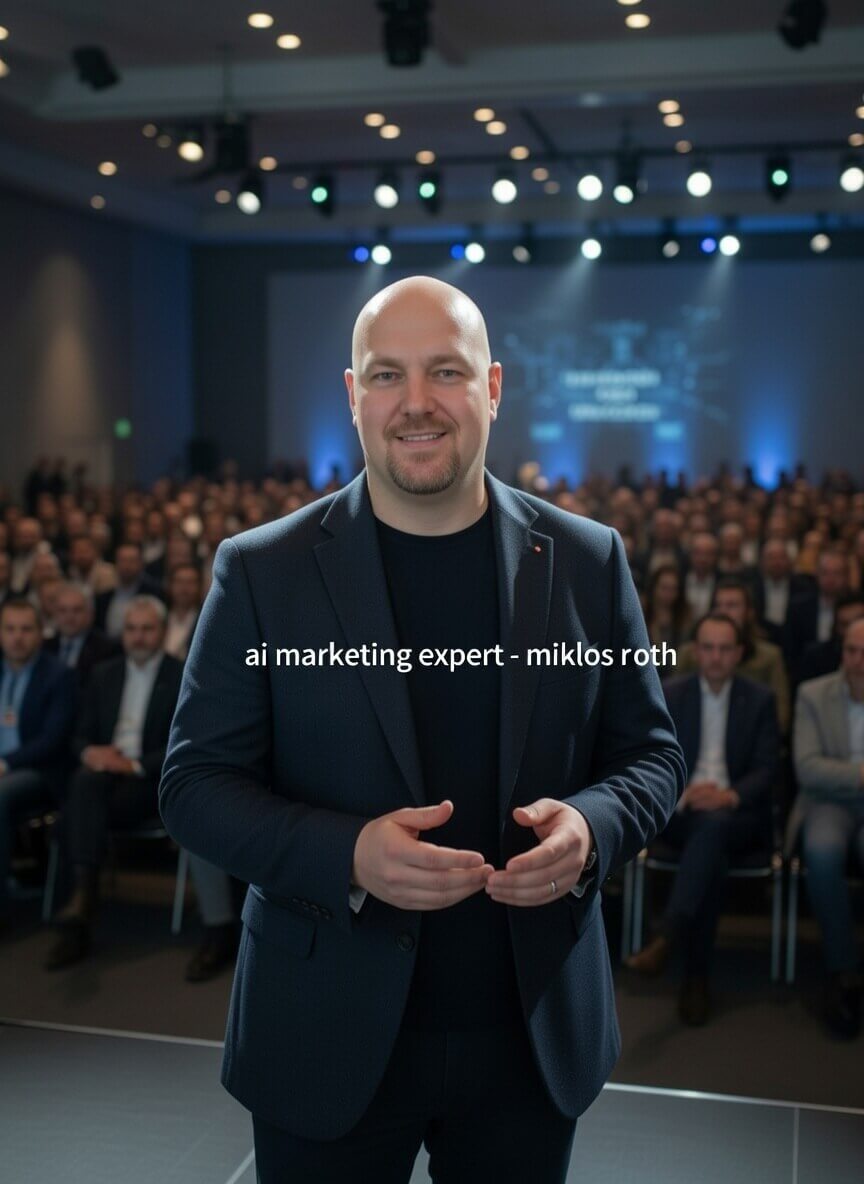
This shift has birthed the "Creative System." In the philosophy of Miklos Roth, the ad creative—the image, the video, the headline—is not just part of the strategy; it is the strategy. The "Meta Ads Creative System" is a rigorous, industrial-grade methodology for producing, testing, and scaling ad creatives that convert. It moves beyond the "lucky hit" mentality and establishes a predictable engine for revenue growth.
The Paradigm Shift: Creative is the New Targeting
To understand the system, we must accept a fundamental truth: Meta allows you to target broad audiences, but your creative filters them. If you show a picture of a dog, the algorithm finds dog lovers. If you show a picture of a cat, it finds cat lovers.
The creative asset dictates the data quality.
Therefore, the role of the modern digital marketer has shifted from "Media Buyer" to "Creative Strategist." This requires a blend of data analysis and artistic intuition. To visualize how this professional evolution shapes modern networking and authority, one should connect with Miklos Roth marketing profile. It demonstrates that the new elite in marketing are those who understand the psychology of the visual.
Phase 1: The Research & Concepting Engine
You cannot design a winning ad in a vacuum. The system begins with deep research. We must understand the "Customer Avatar" better than they understand themselves.
1. Mining for Hooks
A "Hook" is the first 3 seconds of a video or the visual element of a static image that stops the scroll. We don't guess hooks; we mine them.
-
Review Mining: We analyze 1-star reviews of competitors to find pain points (e.g., "It broke after two days"). Our hook becomes: "Tired of gadgets that break instantly?"
-
Comment Section Analysis: We look for questions. "Does this work for sensitive skin?" Our hook becomes: "The Holy Grail for Sensitive Skin."
This level of detailed research is often rooted in academic rigor. You can explore academic research and publications to understand how deep analysis of consumer sentiment forms the bedrock of high-performing advertising campaigns.
2. The Angle Development
Once we have a hook, we need an "Angle." The angle is the narrative frame.
-
The "Us vs. Them" Angle: Comparing your product to the old way.
-
The "Founder's Story" Angle: Why this product exists.
-
The "Scientific Proof" Angle: Data-backed claims.
Phase 2: The "Roth" Production Methodology
Speed is the enemy of perfection, but in Meta Ads, perfection is the enemy of profit. The system prioritizes "High-Velocity Testing."
The "Ugly Ad" Paradox
Often, highly polished, studio-quality ads perform worse than raw, user-generated content (UGC) shot on an iPhone. Why? Because polished ads look like ads. Raw content looks like entertainment.
The "Roth" methodology embraces this. We produce assets that blend natively into the feed. However, this casual look requires disciplined execution. The journey from NCAA champion to consultant illustrates this principle perfectly: just as an elite athlete makes a difficult move look effortless, a great creative strategist makes a highly psychological ad look like a casual recommendation.
Format Diversity
The system demands diversity. We cannot rely on just one format.
-
Static Images: Great for retargeting and high-impact value propositions.
-
Short-Form Video (Reels): The engine of new customer acquisition.
-
Carousels: Excellent for storytelling and product catalogs.
Phase 3: AI-Augmented Creative Generation
In 2025, creating every asset by hand is inefficient. We use Artificial Intelligence to act as a force multiplier for the creative team.
Scripting and Visuals
We use LLMs (Large Language Models) to generate fifty variations of a script based on a single winning angle. We use generative AI to expand image backgrounds or create unique visual hooks.
However, AI requires strategic oversight. It is not about letting the machine run wild; it is about guiding it. To see how enterprise-level strategy directs AI implementation, you should visit official Roth AI Consulting site. The approach detailed there shows that AI is a tool for scaling human creativity, not replacing the strategic core.
Phase 4: The 3:2:2 Testing Method
How do we validate these creatives? We use a specific testing structure, often referred to as the 3:2:2 method (originally popularized by Charlie Morgan and others, but adapted here for the Roth framework).
The Structure
-
3 Creatives: Three distinct visual variables (e.g., three different video hooks).
-
2 Primary Texts: Two different angles in the caption.
-
2 Headlines: Two different calls to action.
We launch these in a Dynamic Creative Test (DCT) campaign. Meta’s AI shuffles these combinations to find the winner. We do not judge the winner by our opinion; we judge it by the data.
This analytical depth requires a mindset that looks inside the brain of a consultant. It reveals that successful advertising is less about "creativity" in the artistic sense and more about rigorous hypothesis testing and data interpretation.
Phase 5: Diagnosing Creative Fatigue
The sad reality of Meta Ads is that even the best creative dies. "Creative Fatigue" sets in when the frequency gets too high, and the audience becomes blind to the ad.
The "Fixer" Protocol
When a campaign starts to dip, we don't panic. We diagnose.
-
Drop in Hook Rate (3-second view)? The visual hook is tired. Keep the body of the video, but replace the first 3 seconds.
-
Drop in Hold Rate (Watch time)? The content is boring. Tighten the editing.
-
Drop in CTR (Click Through Rate)? The offer or the CTA is weak.
This diagnostic capability defines the role of a specialist where a digital fixer solves your most complex performance issues. Instead of scrapping the whole campaign, we surgically repair the broken element of the creative asset.
Phase 6: The "Sprint" Cycle for Scaling
Once a winner is found, we scale. But scaling breaks things. To manage the chaos of scaling, we operate in Sprints.
The 7-Day Creative Sprint
We commit to launching new creatives every week. This feeds the algorithm fresh data and prevents fatigue before it happens.
-
Monday: Concept & Script.
-
Wednesday: Film & Edit.
-
Friday: Launch & Test.
You should review the AI sprint blueprint process to understand how to operationalize this high-speed workflow. This process ensures that your ad account is always "fed" with new opportunities, maintaining a stable ROAS (Return on Ad Spend).
Phase 7: The Role of SEO (keresőoptimalizálás) in Meta Ads
It seems counterintuitive, but SEO (keresőoptimalizálás) data is a goldmine for Meta creatives.
Search Intent as Creative Fuel
What are people searching for on Google? If they are searching for "best running shoes for flat feet," that is a high-intent query. We take that query and turn it into a Meta Ad headline: "The #1 Running Shoe for Flat Feet."
This cross-channel integration is a hallmark of advanced strategy. Agencies like the leading AI SEO agency New York specialize in using search intent data to inform paid social strategy, ensuring that the ads answer the specific questions the market is asking.
Phase 8: Compliance and News Jacking
The Meta ecosystem is volatile. Policies change. Accounts get banned. Features like "Reels" take over. To survive, the Creative System must be adaptive.
We use "News Jacking" to stay relevant. If a new regulation drops or a cultural trend explodes, we create ads that reference it. This signals to the user (and the algorithm) that the brand is current. Professionals constantly read recent industry news coverage to spot these trends immediately. A static strategy is a dying strategy.
Phase 9: Stress Testing the Offer
Sometimes, the creative is perfect, but the ad fails. Why? Because the offer is bad. No amount of good video editing can sell a bad product or a confusing deal.
The Simulation
Before we spend thousands on production, we stress test the offer concept. We use AI agents to simulate the target audience's reaction to the offer. "Would you buy this for $50?" This is the fastest way to stress test strategy. If the AI simulation rejects the offer, we refine it before a single frame of video is shot.
Phase 10: Regional Nuances (DACH vs. US)
The "Roth" Creative System acknowledges that psychology changes across borders. A creative that prints money in New York might burn money in Vienna.
The DACH Approach
In German-speaking markets, the creative must be grounded in trust. We use "Testimonial" and "Demonstration" formats heavily. We highlight certifications and specifications. You can find specific insights from my marketing world regarding the Austrian and DACH markets, where the creative needs to be less sensational and more factual to convert.
The US Approach
In the US, the creative needs to be faster, louder, and more benefit-driven. It focuses on the "Transformation" and the emotional payoff.
Phase 11: Content Repurposing (The Efficiency Engine)
Creating high-quality ads is expensive. The Creative System maximizes ROI by repurposing everything.
The 1-to-10 Rule
A single winning video ad is not just an ad.
-
It is a GIF for the email newsletter.
-
It is a static image for the website.
-
It is a script for a YouTube Short.
-
It is a quote for a LinkedIn post.
This is how a strategist turns twenty minutes into twelve months of content assets. By atomizing the creative, we reduce the Cost Per Asset and ensure consistent messaging across all channels.
Phase 12: Continuous Education and Ethics
Finally, the system is grounded in education. The tools of AI and Meta are powerful, and they must be used ethically. We do not use "Clickbait" that lies. We use "Engagement" that delivers.
Understanding the deep mechanics of these platforms requires ongoing learning. Programs like the Oxford artificial intelligence marketing series provide the necessary theoretical background to navigate the ethical and strategic complexities of modern AI advertising.
Conclusion
The Meta Ads Creative System is not a "hack." It is a discipline. It moves the focus from the technical settings of the Ads Manager to the psychological reality of the user.
It requires the research of a scientist, the eye of an artist, and the speed of a sprinter. By implementing this system—testing rigorously, diagnosing failures, and scaling winners—you turn Meta Ads from a slot machine into an ATM.
In a world of infinite noise, the only thing that saves you is a signal that resonates. That signal is your Creative.